Convert the TTL into a useful change window
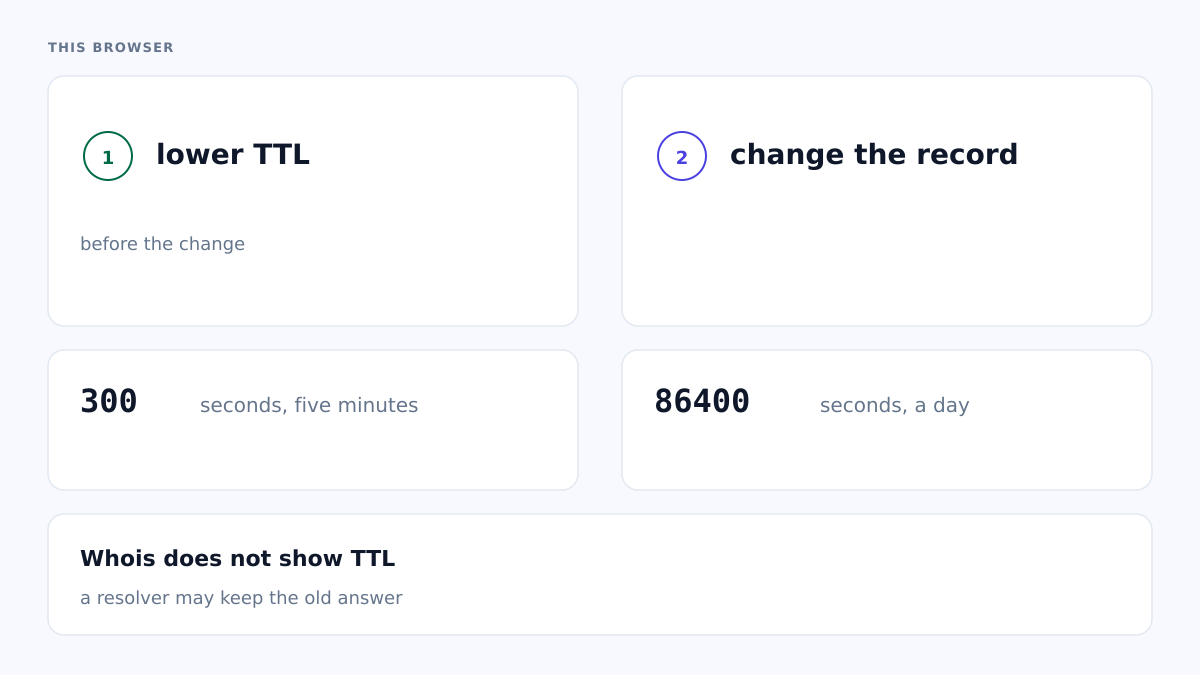
A TTL of 300 means five minutes, 3600 means one hour and 86400 means one day. A recursive resolver may show a remaining TTL smaller than the authoritative value because it cached the answer earlier.
For a cutover at 14:00, changing a one-day TTL to five minutes at 13:55 is too late for clients whose resolvers cached the old one-day answer. Lower it sufficiently ahead of time, verify the authoritative change, and wait out the earlier cache window.
| Seconds | Elapsed time |
|---|---|
| 300 | 5 minutes |
| 3600 | 1 hour |
| 86400 | 1 day |
Use a staged cutover
Record the old address and TTL. Lower TTL at the authoritative provider, wait the previous lifetime, then change the address. Keep the old service working during the overlap if possible. A rollback is another DNS change and also encounters caches.
Check A, AAAA and any CNAME target involved in the application route. PageUtil queries one public recursive service and does not automatically follow CNAMEs. An answer from that resolver is evidence about that request, not every visitor worldwide.
Compare authoritative and recursive evidence
If old answers persist, inspect delegation and query the authoritative server directly with a local DNS client. Negative caching and serve-stale behavior can complicate a simple countdown. Do not keep changing records merely because one laptop still shows an old page.
Log the name, type, queried resolver, response and UTC time. After DNS resolves correctly, check the application and certificate independently; a DNS change alone does not configure the destination web server.
References
Use the linked specifications and product documentation to check behavior in your own environment.
Continue troubleshooting
Related tools
Frequently asked questions
Is TTL measured in minutes?
No. DNS TTL values are expressed in seconds.
Does a new low TTL clear old cache entries?
No. Previously cached records retain the lifetime received before the edit.
Does one recursive answer prove global propagation?
No. It represents the answer from that resolver for that query.