What to run
Open Unix Timestamp Converter. It stays in the browser.
How to read the result
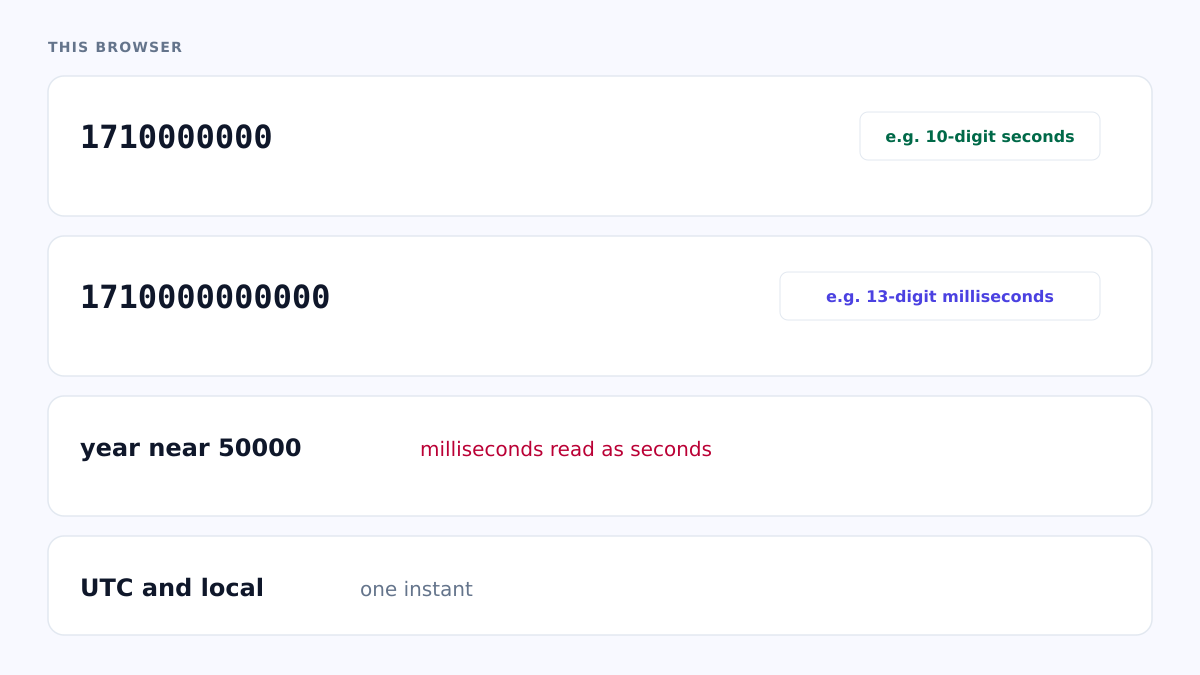
Use the seconds field unless the API docs say milliseconds.
An epoch count identifies the same instant in every timezone. Confirm the input date’s timezone and send the seconds or milliseconds the API specifies; UTC and local are display representations.
What to open next
Open Epoch Now if the value should be close to the present. It stays in the browser.
References
Related tools
Frequently asked questions
Should I send the UTC or the local epoch value?
An epoch count identifies the same instant in every timezone. Confirm the input date’s timezone and send the seconds or milliseconds the API specifies; UTC and local are display representations.
When do I use milliseconds instead of Unix seconds?
Use the seconds field unless the API docs say milliseconds. Near the present era, ten digits commonly indicate seconds and thirteen milliseconds; confirm the source unit.
Where do I check a value that should be near now?
Open Epoch Now if the value should be close to the present. It stays in the browser.