What to run
Open Base64 Encode and Decode. It stays in the browser.
How to read the result
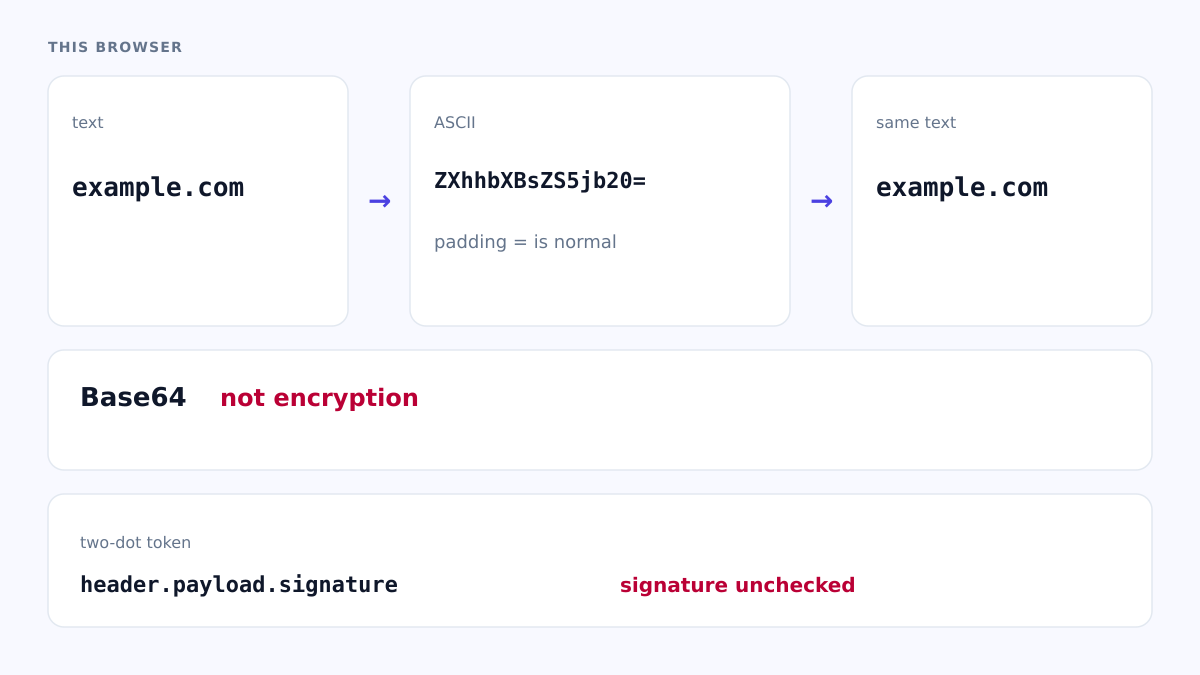
Output is ASCII.
Padding = is normal.
Unicode is included, so a round trip should match.
Base64 is not encryption.
What to open next
Open URL Encoder if the Base64 must sit in a query string. +, /, and = are unsafe there. It stays in the browser.
References
Related tools
Frequently asked questions
Is Base64 the same as encryption?
Base64 turns text into ASCII and back, and it is not encryption. The output is ASCII.
Why does Base64 output end with equals signs?
Padding = is normal. Unicode is included, so a round trip should match.
Can Base64 sit safely in a query string?
If the Base64 must sit in a query string, +, /, and = are unsafe there. URL Encoder stays in the browser.